
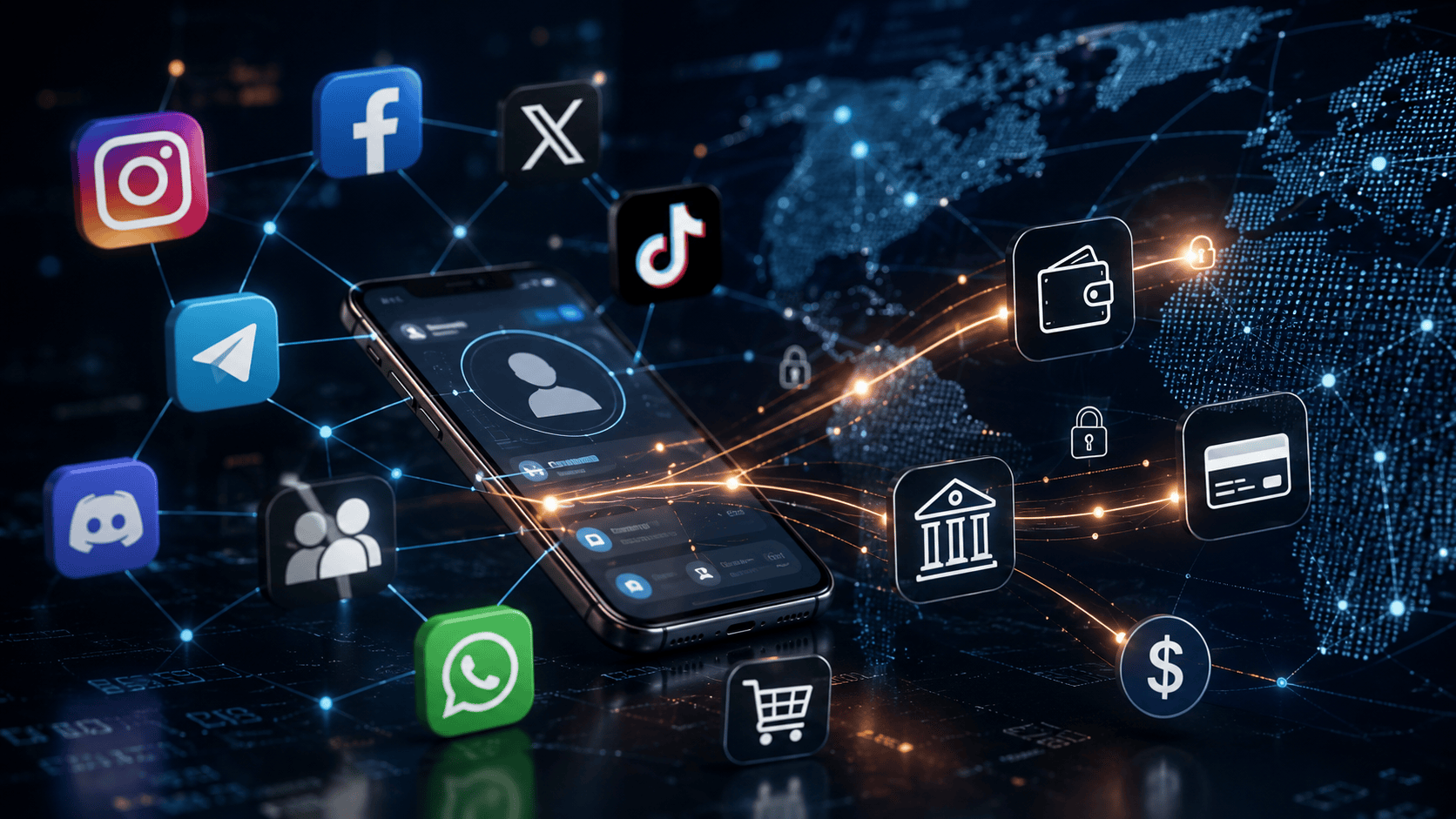
Social media platforms, messaging applications and streaming services are no longer just communication tools. Increasingly, they function as financial ecosystems, offering peer-to-peer payments, crowdfunding opportunities, subscriptions, digital tipping and in-app purchases. For expatriates and internationally mobile families, these services provide convenience and speed. However, the same features can also create opportunities for hidden financial flows, fraudulent fundraising campaigns and transactions whose true purpose may be difficult to determine.
A recent report published by the Financial Action Task Force (FATF) highlights how social media and digital communication platforms are increasingly being exploited to facilitate illicit financial activity, including terrorist financing. As a result, financial institutions worldwide are expanding their risk assessments and paying greater attention to the digital context surrounding certain transactions.
Why Social Media Is No Longer Just About Communication
Only a few years ago, social media platforms were primarily used to share content and communicate with others. Today, a single platform may combine messaging, fundraising, payment functionality and financial transfers within the same user experience.
This convergence creates new challenges for regulators, financial institutions and consumers alike.
According to FATF, risks do not arise solely when a platform directly processes payments. A transaction may begin with a public post, continue through a private or encrypted group and ultimately be completed through a bank transfer, prepaid card, third-party payment service or other financial channel. This can make financial flows more difficult to understand and monitor.
Examples of higher-risk scenarios include:
- Humanitarian or charitable fundraising campaigns with unclear beneficiaries.
- Payment instructions distributed through private or encrypted groups.
- Frequently changing payment details or QR codes.
- Fundraising disguised as product sales or event ticket purchases.
- Monetization of live streams, subscriptions and digital donations.
- Direct purchases conducted outside traditional financial channels.
While these activities are not inherently suspicious, they can limit transparency and increase the complexity of risk assessment.
The risk does not lie in the technology itself. The risk emerges when the speed of a transaction, the influence of emotions and the uncertainty surrounding the recipient outweigh informed financial decision-making.
What This Means for Investors and International Clients
For most individuals, the practical impact will not involve monitoring social media activity or investigating online profiles. Instead, it is likely to appear through enhanced due diligence measures conducted by banks, payment providers and other regulated institutions.
Particular attention may be given to:
- Transactions connected to online fundraising activities.
- Repeated payments through unfamiliar channels.
- Large numbers of small payments made to multiple recipients.
- Transfers involving jurisdictions considered higher risk.
- Transactions where the economic purpose or beneficiary is unclear.
The presence of these factors does not indicate wrongdoing. However, they may lead to requests for additional information regarding the source of funds, the purpose of a payment or the relationship between the payer and recipient.
Understanding the Regulatory Landscape
FATF also notes that social media and communication platforms are not automatically classified as financial institutions.
The regulatory treatment depends on the actual services provided. Where a platform simply offers a technical interface and relies on a licensed payment provider, primary regulatory obligations may remain with that provider. However, if a platform directly controls, transfers, stores or exchanges funds or virtual assets, regulatory requirements may apply depending on the nature of the activity.
As digital ecosystems continue to evolve, regulators and financial institutions are increasingly focused on understanding these business models and assessing their associated risks.
Three Practical Precautions Before Making an Online Payment
Before making a significant or unusual payment following a request received through social media, consider the following:
1. Verify the Recipient
A professional profile, attractive branding or a large number of followers does not necessarily confirm legitimacy. Where possible, verify the identity of the individual or organization independently.
2. Understand the Purpose of the Payment
Legitimate organizations should be able to clearly explain who is receiving the funds, how they will be used and why a particular payment method is required.
3. Retain Supporting Documentation
For larger transactions, keep relevant communications, payment confirmations and supporting documents that explain the economic purpose of the transfer. This information may be useful if further clarification is requested by a financial institution.
Warning signs may include urgent demands for payment, emotional pressure, frequent changes to payment information, requests to move conversations into private groups or instructions to divide a transfer into multiple smaller payments.
The Importance of Context in Modern Financial Security
Financial security today extends beyond traditional bank statements and transaction records. As payments increasingly intersect with digital platforms, understanding the context behind a transaction becomes just as important as understanding the transaction itself.
At Aisa International, we provide independent financial planning and compliance oversight services that help clients better understand regulatory developments, financial risks and evolving expectations within the international financial system. Our role is not to approve or monitor individual client transactions, but to help clients navigate an increasingly complex financial environment with confidence and clarity.
The future of financial security will depend not only on stronger controls, but also on the ability to connect financial activity with its broader digital context while preserving the convenience and efficiency that modern technology offers.
Frequently Asked Questions
- Are social media platforms regulated in the same way as banks? Generally, no. Regulatory treatment depends on the specific financial functions performed by the platform or its service providers.
- Is every online fundraising campaign a risk? No. Many fundraising initiatives are entirely legitimate. Greater caution is advisable when the organizer, beneficiary or use of funds is unclear.
- Why might a bank ask questions about an online payment? Financial institutions are required to assess unusual or potentially higher-risk transactions. Requests for additional information are a normal part of this process and do not necessarily indicate suspicion of wrongdoing.
- Are in-app payment services safe to use? They can be, provided users understand who provides the service, how it is regulated and where funds are ultimately being transferred.
- What warning signs should I look for? Common red flags include urgency, emotional pressure, requests to move communications to private channels, repeatedly changing payment details and a lack of transparency regarding the recipient.
- How can Aisa International help? Aisa International provides independent investment advice, financial planning and compliance oversight services. We help clients understand financial risks and regulatory considerations so they can make informed decisions in an increasingly digital world.
