
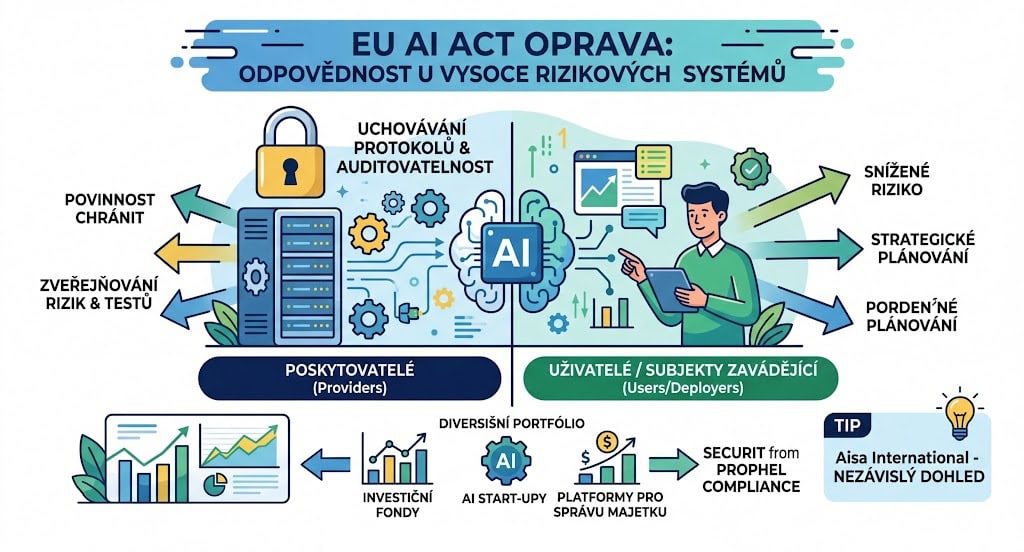
The latest refinements to the EU AI Act, finalized in early 2024 and further clarified through 2026 implementing acts, have brought much-needed legal certainty regarding high-risk AI systems. For high-net-worth individuals (HNWIs) and expats, this has direct implications for tech fund investments, portfolios with AI components, and partnerships with AI-driven service providers. The distinction between a “user” and a “provider” now clearly dictates who is responsible for logging and auditability.
How these changes impact investment and asset management
Recent updates clarify that the primary responsibility for maintaining logs and ensuring compliance of high-risk AI systems lies with the “providers” (the developers or manufacturers), not the “deployers” (formerly referred to as users). This shift is crucial for your investment strategy:
-
Risk assessment in tech funds: If you invest in funds involving AI startups, it is vital to verify that these entities meet their provider obligations. Non-compliance could jeopardize the fund’s valuation or liquidity.
-
Operational safety: When using platforms for automated trading or wealth management that utilize high-risk AI, the responsibility for system integrity remains with the developer. This significantly reduces the compliance risk transferred to you as a client.
💡 STRATEGIC TIP: When investing in AI assets, always verify the provider’s compliance oversight rather than relying solely on the platform’s marketing claims. Aisa International provides independent oversight of these processes.
Transparency and Regulatory Sandboxes
The updated Article 50 of the AI Act distinguishes more clearly between the obligations of providers and those who deploy AI systems. This is fundamental for investment due diligence:
-
Mandatory Transparency: Providers must disclose information regarding risks, parameters, and testing of AI systems. This allows for better risk evaluation of your assets.
-
Safe Innovation via Sandboxes: New rules allow for testing AI in real-world conditions under strict supervision. This fosters safer market entry for new technologies without exposing the investor to direct compliance failures.
💡 STRATEGIC TIP: Monitor whether tests are conducted in real-world conditions according to current EU rules – this directly affects the stability and predictability of investment returns.
Practical steps for the global investor
-
Identify AI components within your portfolio (funds, startups, tech services).
-
Verify the “Provider” status to ensure the responsibility for auditability is correctly assigned.
-
Check for transparency reports and mandatory testing logs.
-
Utilize independent oversight – Aisa International monitors compliance frameworks without interfering in individual transactions.
-
Ensure risk reporting for your own investment strategy – correctly interpreted logs allow you to react quickly to regulatory changes.
Verdict
The evolution of EU AI regulation reduces unforeseen sanctions for investors and provides a clearer capital allocation strategy. By shifting the burden of logging to providers, the EU has made AI-driven wealth management more robust and transparent. Ensuring your assets are aligned with these rules is no longer just a legal requirement—it is a strategic advantage.
FAQ – Frequently Asked Questions
-
Who is now responsible for logging in high-risk AI systems? Providers of these systems, not the users (deployers).
-
How does this change affect my AI fund investments? Significantly – compliance by the provider ensures that investments are not jeopardized by a lack of auditability.
-
What does transparency under Art. 50 mean for the client? Providers must disclose system information and test results, allowing you to better evaluate risks.
-
What is a regulatory sandbox and why does it matter? It is a secure space for testing AI in real-world conditions under supervision, protecting investors from unexpected compliance fallout.
-
How does Aisa International assist with these changes? We provide independent oversight of compliance processes and strategic recommendations for asset management without interfering in individual transactions.
